Back
Back
Turning a branded product into a scalable system
Turning a branded product into a scalable system
From UI/UX designer to sole designer of a digital energy assistant app that helps users use energy at the cheapest and greenest times of the day. Responsible for refining structure, improving cross-team collaboration, and preparing the design system for scale.
From UI/UX designer to sole designer of a digital energy assistant app that helps users use energy at the cheapest and greenest times of the day. Responsible for refining structure, improving cross-team collaboration, and preparing the design system for scale.
Scope
User Experience · Visual Design · Design System
Overview
6-month trial · 140 users · White-label preparation
Alice ran a 6-month trial with AGL in Australia, involving around 140 real users. The product was validated and a new requirement emerged:
Alice ran a 6-month trial with AGL in Australia, involving around 140 real users. The product was validated and a new requirement emerged:
Full white-label capability.
But the system wasn’t built for that.
Full white-label capability.
But the system wasn’t built for that.
Adapting it meant duplication, manual effort and engineering overhead.
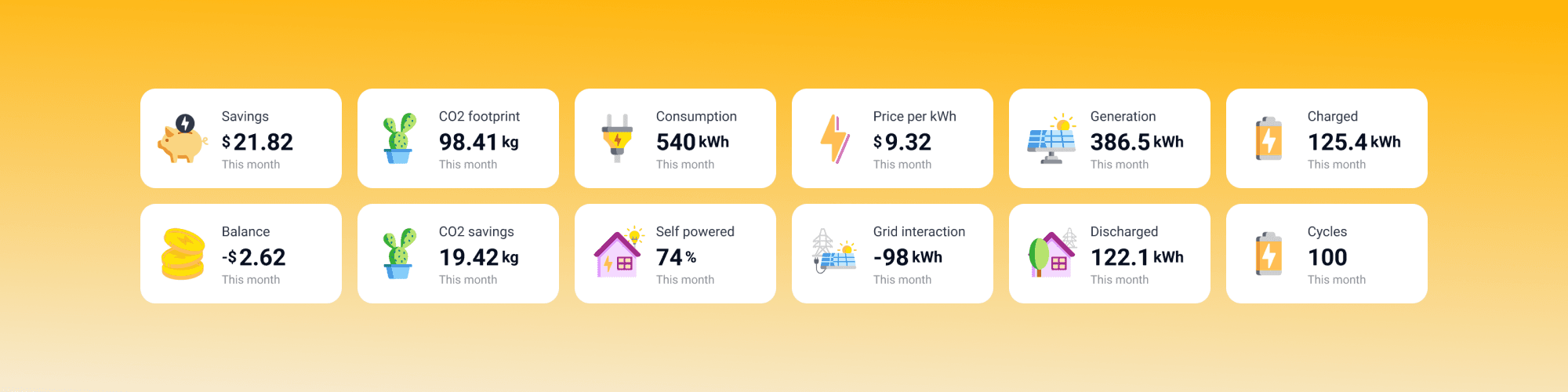
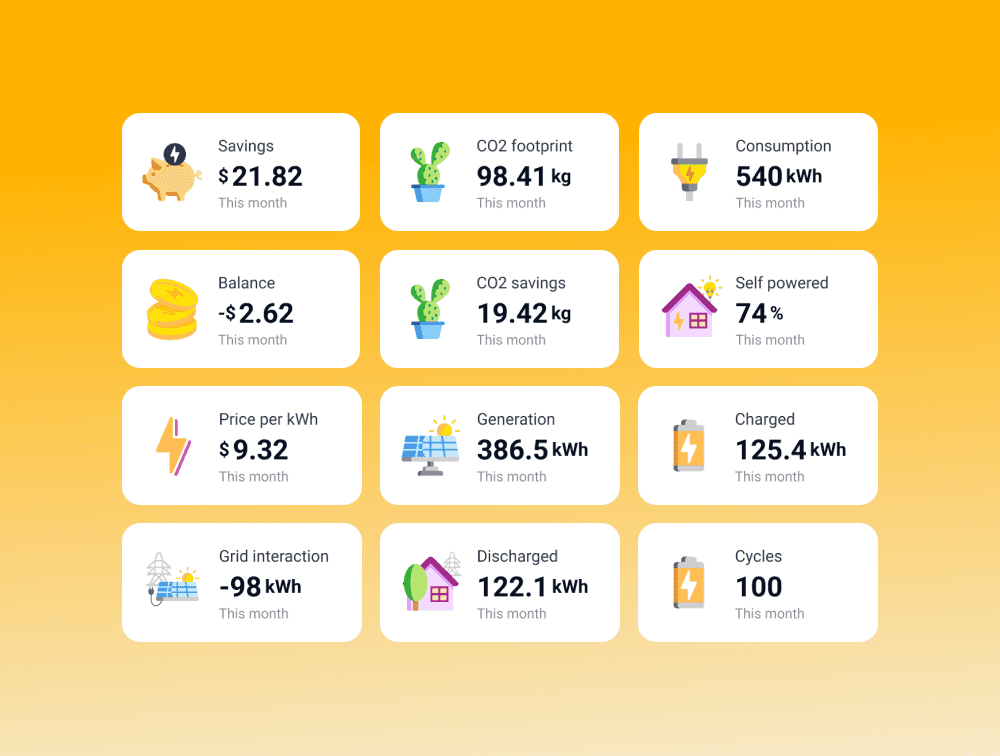
At the same time, trial insights showed the homescreen, the most visited screen, was being used as a quick status check, not a decision dashboard. It was dense where it needed clarity.
The problem wasn’t visual. It was structural.
Adapting it meant duplication, manual effort and engineering overhead.
At the same time, trial insights showed the homescreen, the most visited screen, was being used as a quick status check, not a decision dashboard. It was dense where it needed clarity.
The problem wasn’t visual. It was structural.
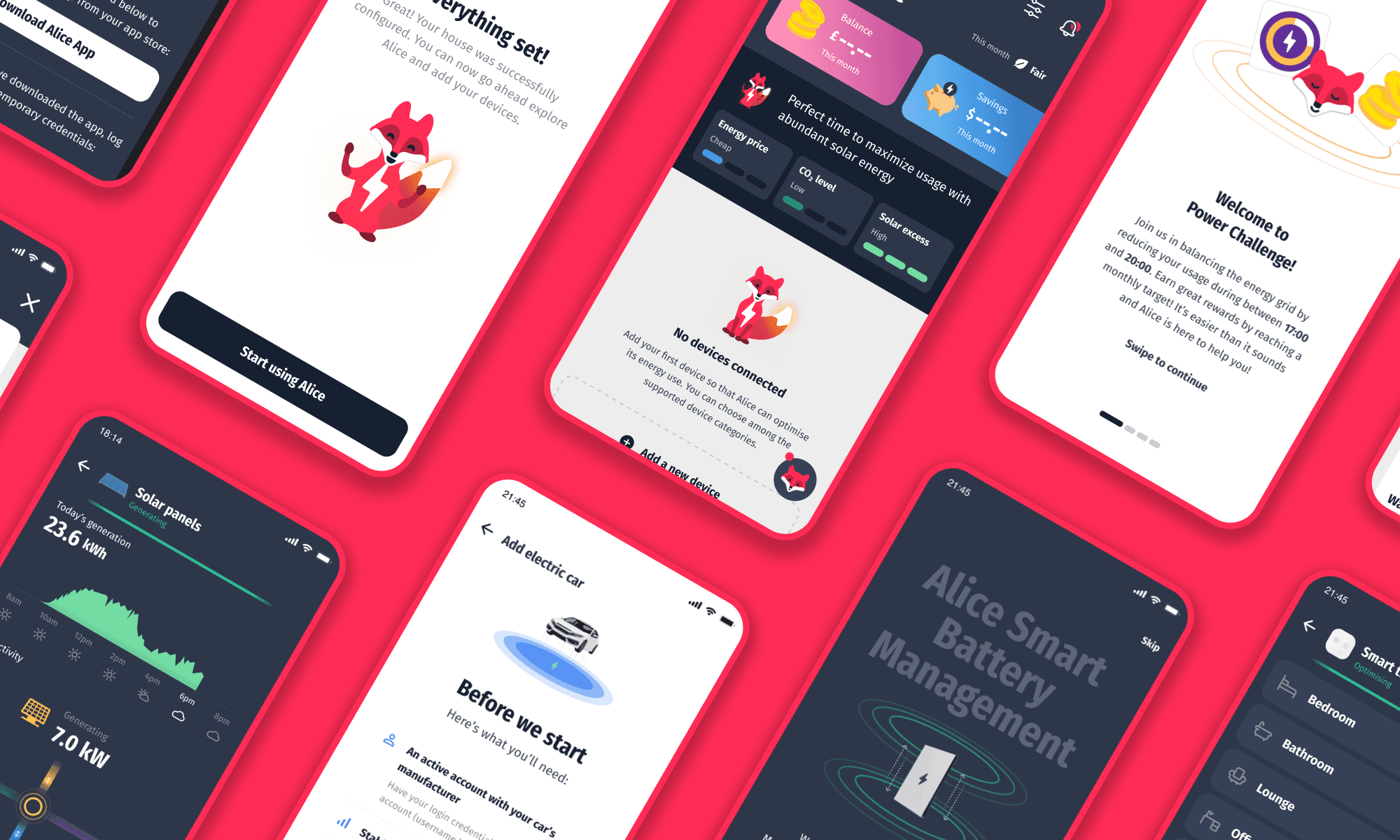
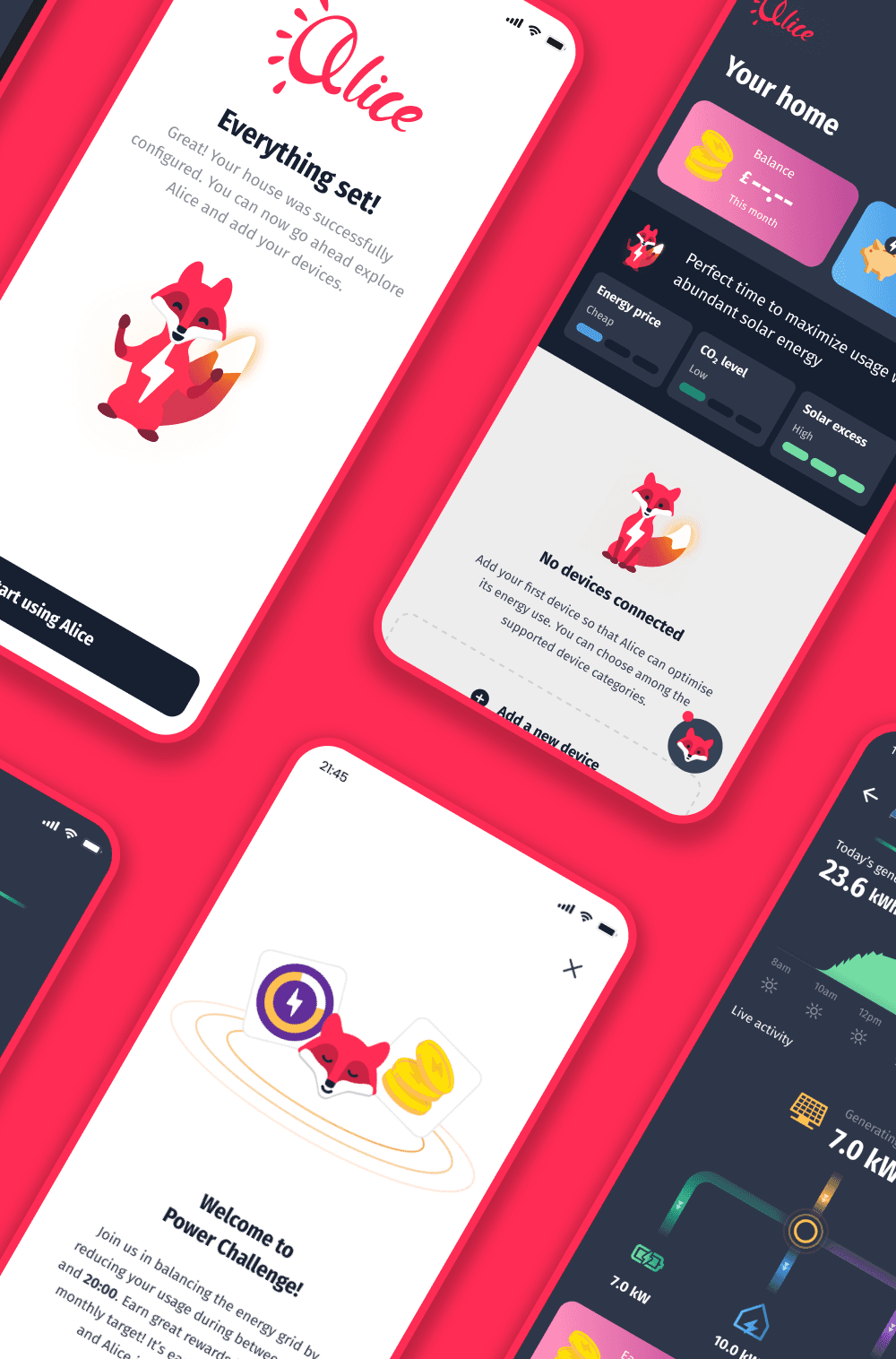
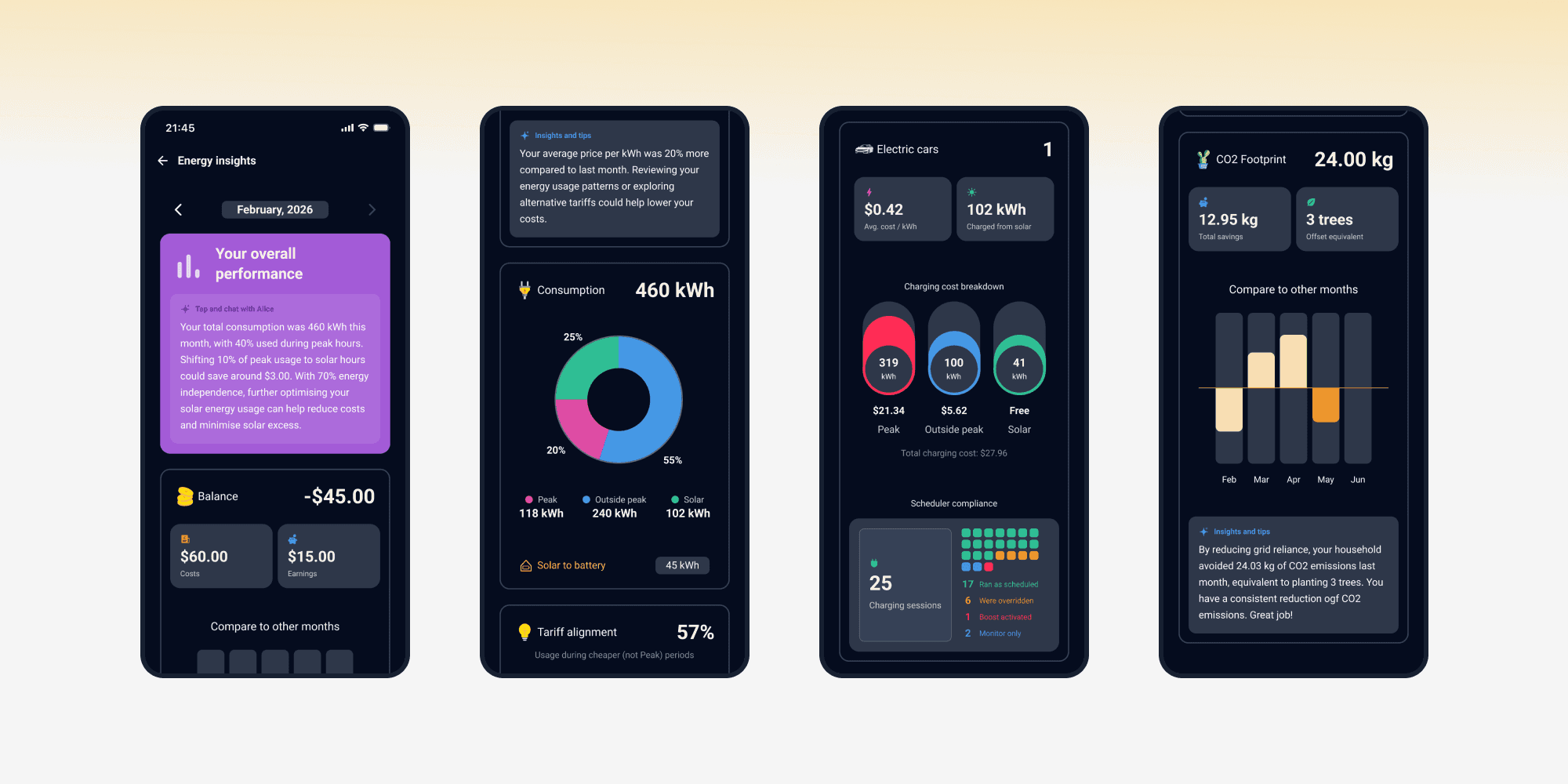
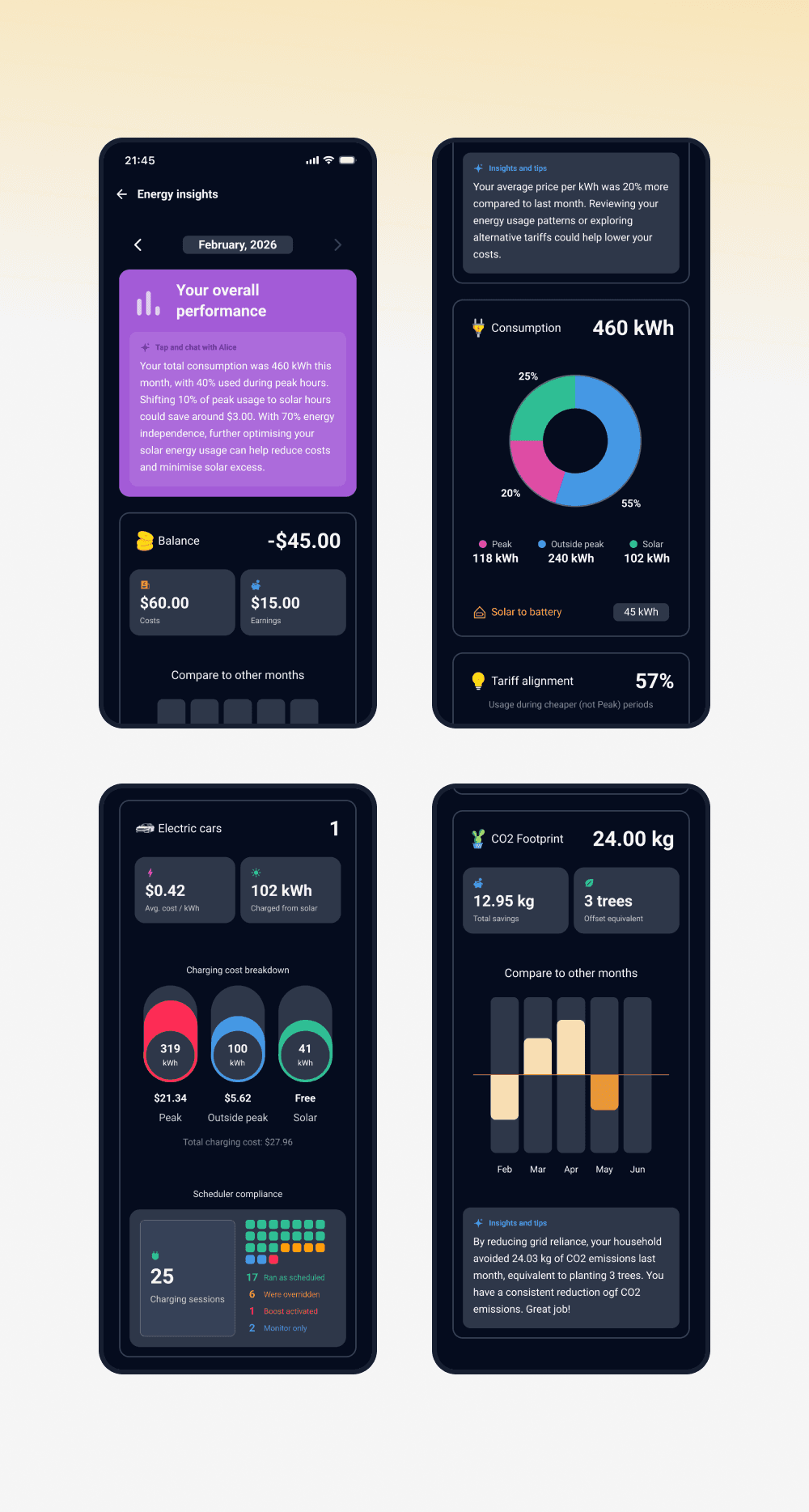
Working closely with design, product and engineering, I decoupled identity from structure, reworking information architecture before touching UI polish. I restructured the homescreen around real-time state, prioritising clarity over density.
Working closely with design, product and engineering, I decoupled identity from structure, reworking information architecture before touching UI polish. I restructured the homescreen around real-time state, prioritising clarity over density.
Instead of layering a new brand on top, brand dependency was reduced at system level.
Instead of layering a new brand on top, brand dependency was reduced at system level.
The product moved closer to white-label readiness without a rebuild.
The product moved closer to white-label readiness without a rebuild.
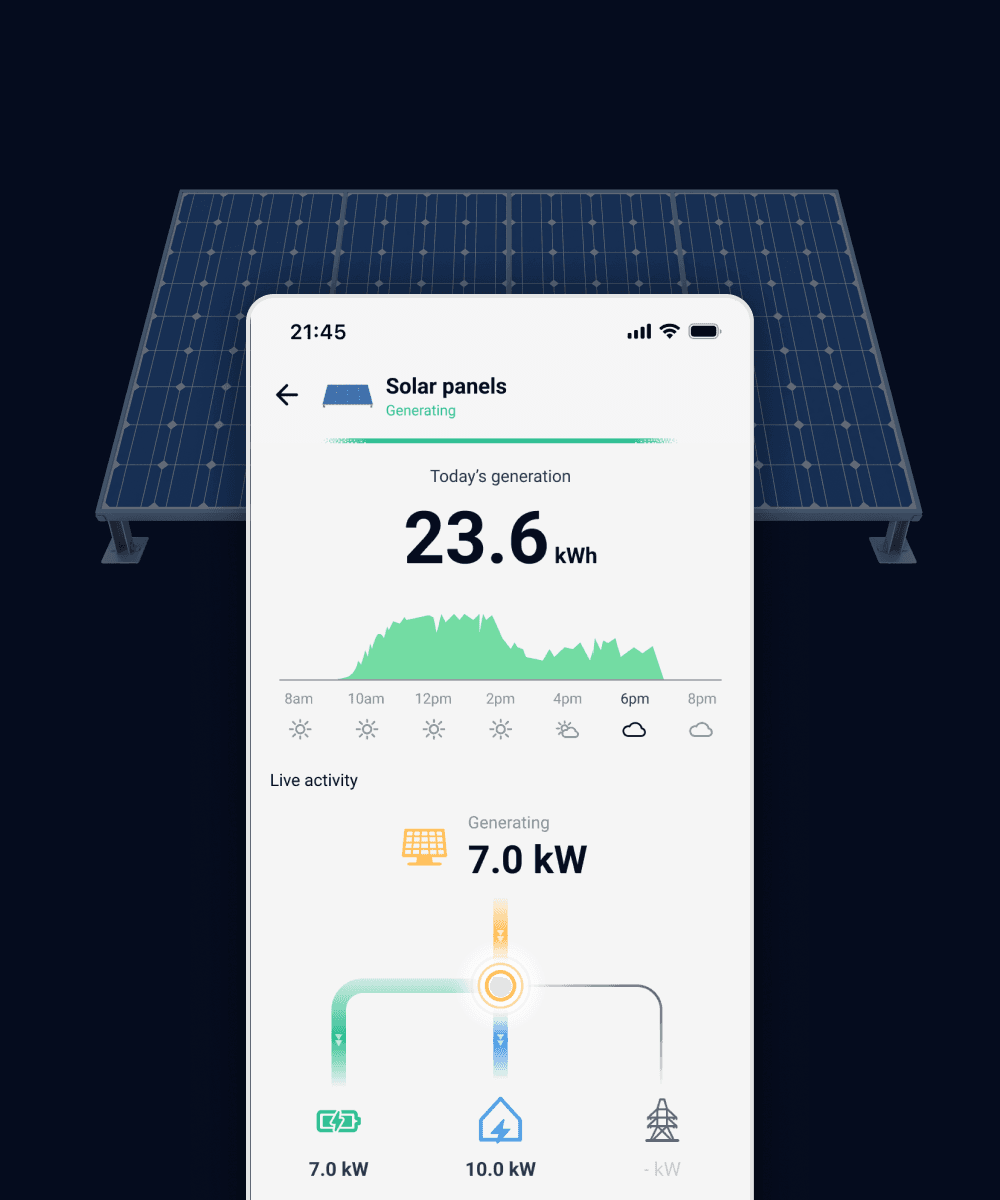
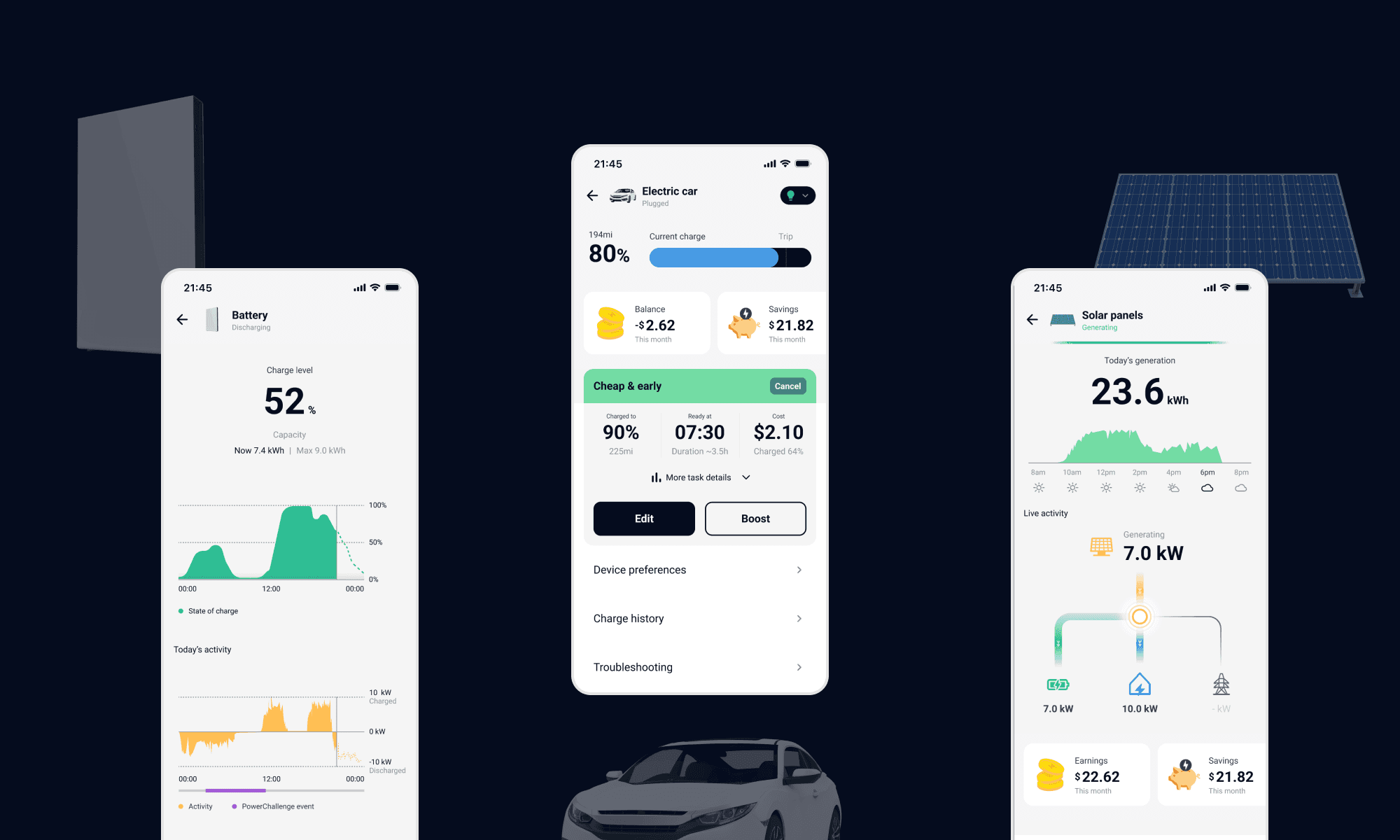
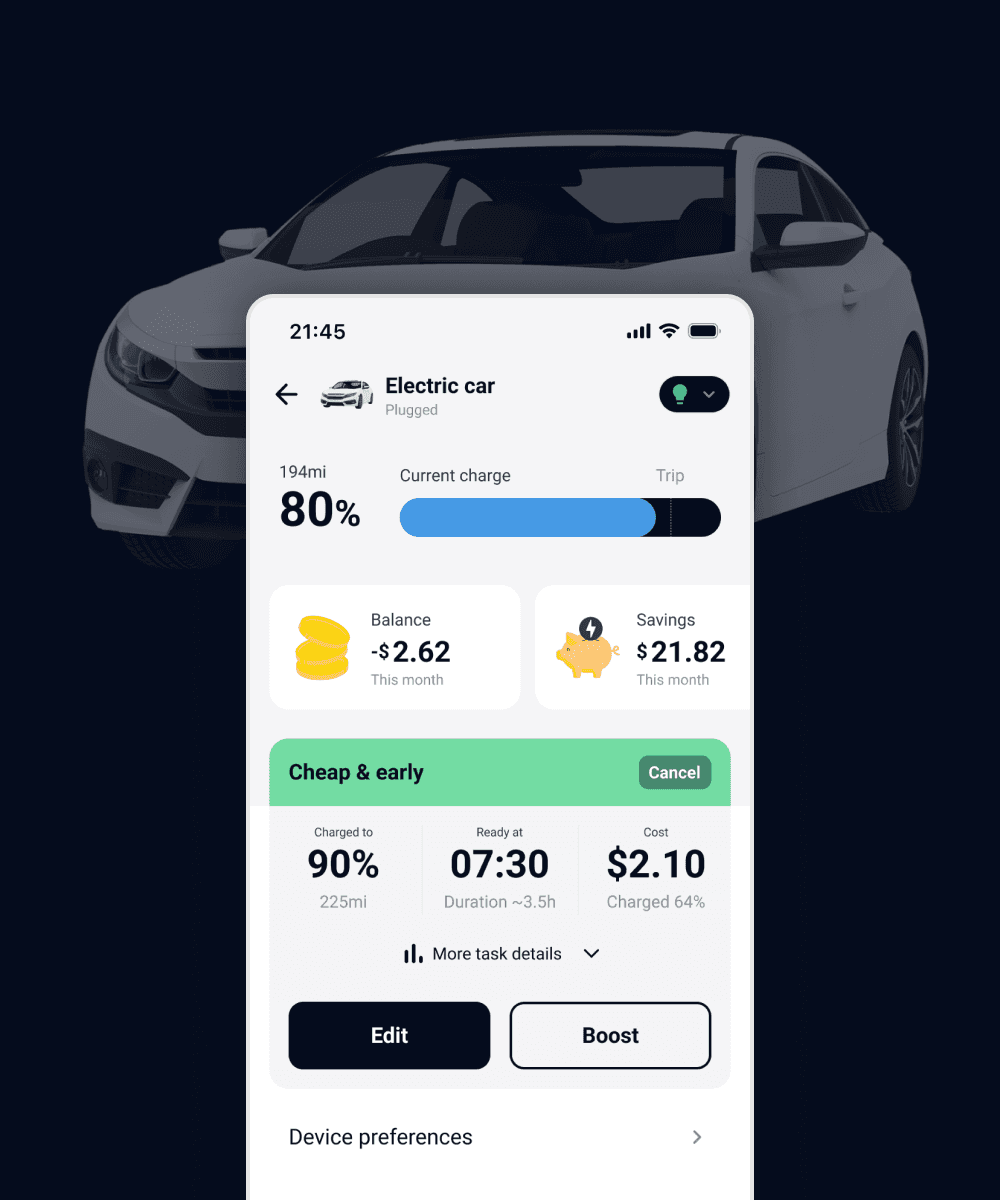
In between this process, the client withdrew, but the structural weaknesses remained.
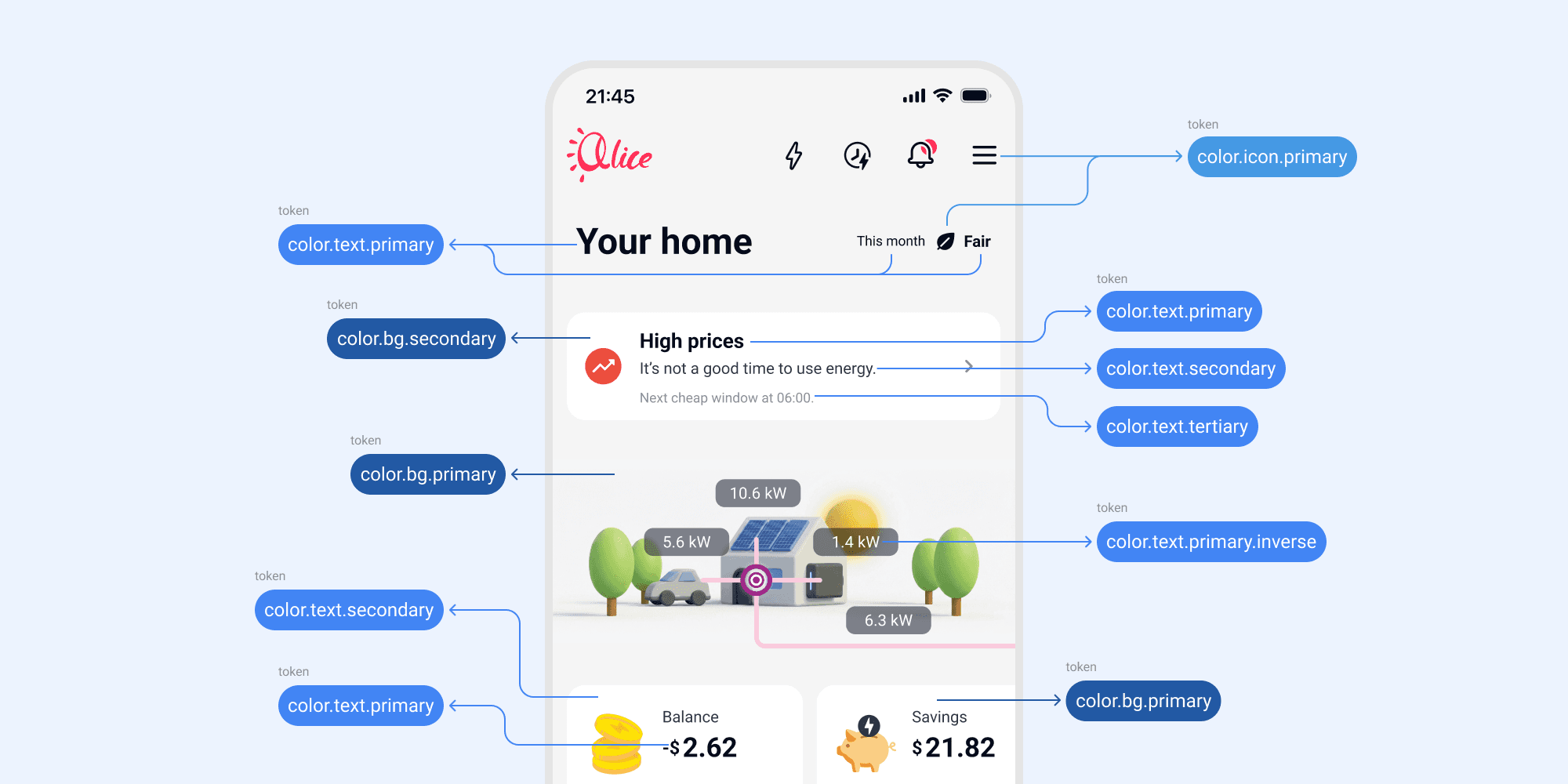
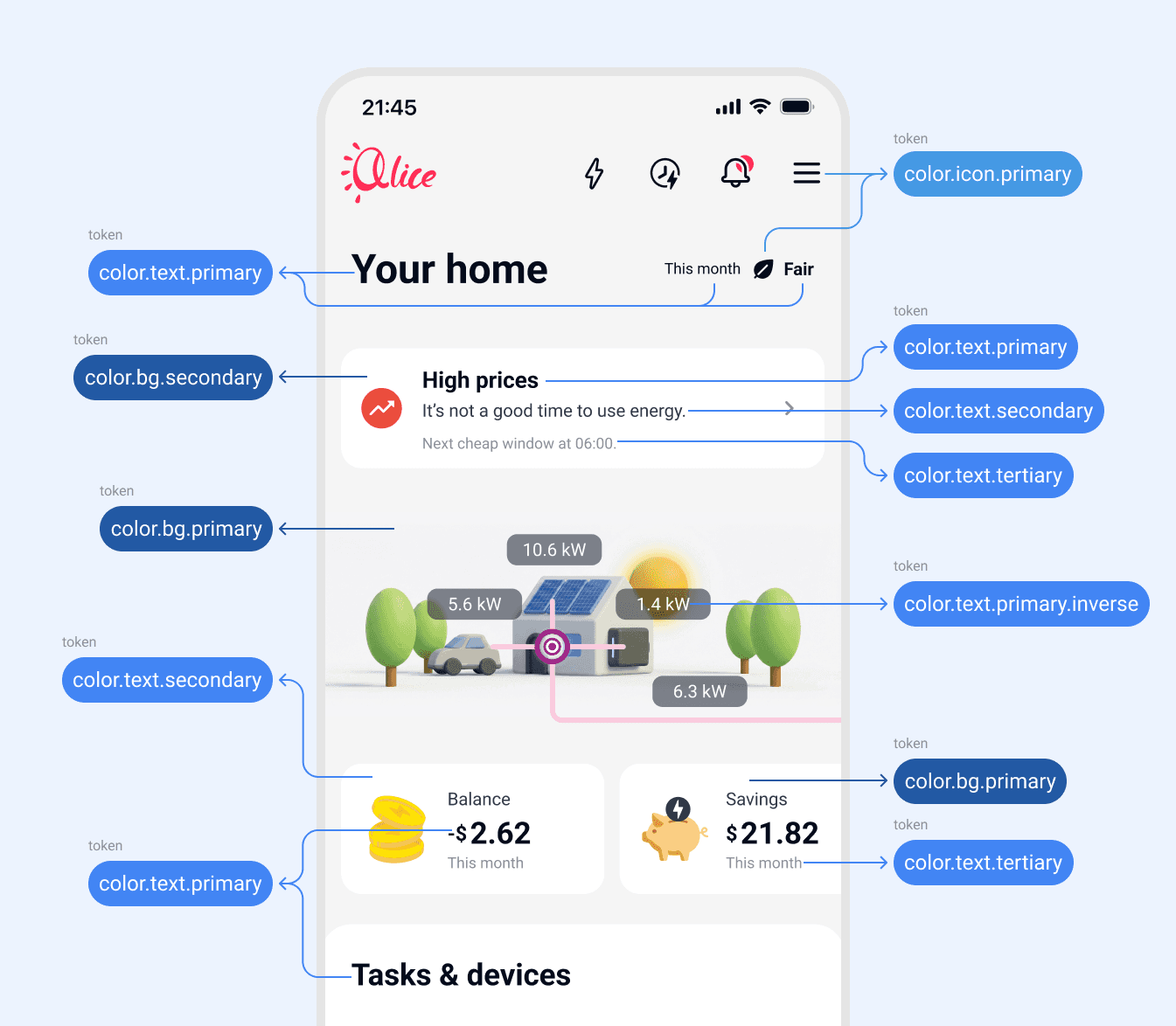
I took the opportunity to introduce design tokens as a scalable foundation. To map the existing styles and define a consistent naming structure, I used AI to accelerate the taxonomy. Then stress-tested the token system against edge cases and engineering constraints with AI before finalising.
Starting small and aligned with engineering structure, this shifted the product from brand-driven UI decisions to controlled variation at system level.
In between this process, the client withdrew, but the structural weaknesses remained.
I took the opportunity to introduce design tokens as a scalable foundation. To map the existing styles and define a consistent naming structure, I used AI to accelerate the taxonomy. Then stress-tested the token system against edge cases and engineering constraints with AI before finalising.
Starting small and aligned with engineering structure, this shifted the product from brand-driven UI decisions to controlled variation at system level.
No duplication. No drift.
No duplication. No drift.
Alice was not a greenfield project. I inherited a strongly branded product with evolving ambitions. My contribution was structural: simplifying complexity, decoupling identity and preparing the system to scale.
Alice was not a greenfield project. I inherited a strongly branded product with evolving ambitions. My contribution was structural: simplifying complexity, decoupling identity and preparing the system to scale.